
What Is Strict Product Liability?

Strict product liability is a legal doctrine that holds manufacturers, distributors, and retailers responsible for selling defective products that cause injury or loss, regardless of the precautions taken during design and assembly. Introduced to protect consumers who lack the technical means to inspect complex commercial goods, this standard ensures that businesses bear the financial burden of dangerous product failures.
Federal agencies maintain rigorous compliance benchmarks across consumer markets. For example, product safety enforcement rules enforced by the U.S. Consumer Product Safety Commission (CPSC) require companies to report product defects immediately to prevent severe consumer harm and avoid substantial civil penalties.
To establish a strict product liability claim, an injured party generally must prove three basic elements:
- The product contained an unreasonably dangerous defect when it left the defendant’s control.
- The product was used in a intended or reasonably foreseeable manner.
- The defect directly caused physical injury, economic loss, or property damage.
Manufacturing Defects vs. Design Flaws: Key Differences
Product defects fall into distinct legal classifications. Discerning the difference between a manufacturing defect and an inherently unsafe design flaw determines how liability is evaluated in court and how quality assurance teams must respond.
| Defect Category | Legal Definition | Operational Cause | Scope of Exposure |
|---|---|---|---|
| Manufacturing Defect | A product departs from its intended design specifications despite all due care in preparation. | Assembly line errors, flawed materials, contaminated chemical mixtures, or human mistake. | Typically isolated to specific production units, batches, or individual product runs. |
| Design Flaw | The product’s planned specifications create an inherent and unnecessary danger to users. | Poor engineering calculations, unsafe materials selection, or failure to test alternative designs. | Affects every single unit manufactured according to those specifications across the entire product line. |
| Inadequate Warning (Marketing) | Failing to provide reasonable instructions or clear warnings about non-obvious hazards. | Incomplete user manuals, missing safety labels, or poor hazard communications. | Exposes the brand across all units distributed without sufficient warning labels. |
Evaluating Design Flaws: The Legal Tests
Courts evaluate alleged design flaws using two primary standard tests:
- The Consumer Expectations Test: Did the product fail to perform as safely as an ordinary consumer would reasonably expect when used in a foreseeable manner?
- The Risk-Utility Test: Do the inherent risks of the product’s design outweigh its functional benefits? Courts weigh whether a safer, economically feasible alternative design was available to the manufacturer at the time of production.
Supply Chain Vulnerability: Who Bears Liability?
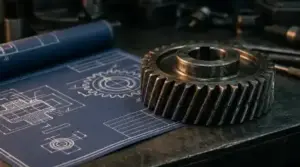 A common misconception among commercial distributors and retailers is that strict liability applies only to the original manufacturer. In modern product liability doctrine, strict liability attaches to every commercial entity within the distribution chain.
Potential targets in strict liability lawsuits include:
- Component Part Manufacturers: Suppliers who produce a defective sub-assembly, raw material, or individual part integrated into the final consumer goods.
- Assembling Manufacturers: Companies that design, build, and package the final commercial item for consumer or enterprise use.
- Wholesalers & Distributors: Intermediaries who manage warehousing, bulk logistics, and supply distribution channels.
- Retailers & E-Commerce Sellers: Direct-to-consumer businesses that place defective items into the stream of commerce, even if they never opened the sealed product packaging.
While retailers and distributors may seek legal indemnification from the primary manufacturer, company insolvency or foreign supplier origins often leave middle-tier sellers directly responsible for judgments and legal defense costs.
Mitigating Product Liability Exposure: Actionable Checklist
Shielding your enterprise from strict product liability requires a proactive approach integrating quality control, clear warnings, and robust contractual protections. Implement this practical checklist to lower product safety exposure:
- Enforce Rigorous Batch Tracing & QA Protocols: Maintain detailed production logs, component serial tracking, and automated testing documentation to quickly isolate localized manufacturing defects before distribution.
- Conduct Formal Risk-Utility Engineering Reviews: Document alternative design evaluations during product development to demonstrate that chosen specifications optimize safety and functionality.
- Audit Product Labeling against ANSI Standards: Ensure warning labels use clear pictograms, explicit hazard descriptions, and standardized formatting compliant with industry guidelines.
- Secure Comprehensive Commercial Supplier Indemnification: Require all upstream component vendors and contract manufacturers to sign hold-harmless agreements backed by adequate liability insurance coverage.
- Establish a Dedicated Crisis & Recall Protocol: Form a product safety response committee prepared to execute voluntary product recalls, customer notifications, and regulatory filings immediately upon detecting systemic hazards.
By prioritizing rigorous design evaluation, strict quality assurance standards, and thorough supply chain contracts, businesses can minimize strict product liability exposure and defend their brand against high-stakes product litigation.